MPESB Syllabus 2026
Knowing the syllabus is the first real step in any MPESB preparation. This page explains the common subjects, the exam pattern, how to study each section, recommended books, and links to a detailed syllabus for each exam.
Before you open a single book, you need to know exactly what to study, and that is what the syllabus tells you. The MPESB syllabus lists the subjects and topics that can be asked in the exam, while the exam pattern tells you the marks split, the number of questions, the duration and the language. Used together, they let you plan your preparation around the topics that carry the most marks, instead of studying randomly and hoping for the best. Since the syllabus changes from one post to another, always use the syllabus for your exact exam rather than a generic list.
The good news is that most MPESB exams share a common base of subjects, so a lot of your preparation carries over even if you apply for more than one post. On top of this common base, technical, teaching and nursing posts add subject specific sections. This page walks you through the common subjects, the typical exam pattern, and a practical study method, and then points you to the detailed syllabus for each major exam.
The common MPESB syllabus
Across clerical, police and many group exams, the following subjects appear again and again. The exact weight changes by post, but the topics are broadly stable.
- General Knowledge and Current Affairs: Indian history, geography, polity and economy, plus current events of India and especially Madhya Pradesh, including the state’s geography, culture, festivals, rivers, parks and schemes.
- General Hindi: grammar, vocabulary, sentence correction, idioms and comprehension.
- General English: grammar, vocabulary, error spotting, fill in the blanks and comprehension.
- Mathematics or Quantitative Aptitude: number system, percentage, ratio and proportion, average, profit and loss, time and work, time speed and distance, simple and compound interest, and data interpretation.
- Reasoning and Mental Ability: series, analogy, coding decoding, blood relations, direction sense, syllogism, and non verbal reasoning.
- General Science: basic physics, chemistry and biology at the school level, with everyday science.
- Computer Knowledge: basics of hardware, software, MS Office, internet and common shortcuts, important for Group 4 and posts that need CPCT.
Madhya Pradesh specific General Knowledge deserves special attention, because a noticeable share of questions focuses on the state. Devoting steady time to MP history, geography, polity and current affairs often makes the difference in a close cut off.
Typical MPESB exam pattern
Most MPESB papers follow a similar shape, though the section weights differ by post.
| Feature | Typical detail |
|---|---|
| Mode | Computer based test (online) |
| Total marks | 100 |
| Questions | 100 objective (MCQ) |
| Duration | 2 hours (120 minutes) |
| Language | Hindi, and English for many posts |
| Negative marking | Depends on the exam; several have none |
| Scaling | Normalised Equi-Percentile for multi shift exams |
Knowing whether your exam has negative marking changes your strategy. When there is no negative marking, as in the Police Constable exam, you should attempt every question, because a guess can only help you. When negative marking applies, attempt only the questions you are reasonably sure about, and skip wild guesses. Always confirm this rule from your exam’s notification.
How to study each section
A simple, repeatable method works better than a complicated one. Start by downloading the syllabus for your exact post and ranking the sections by their marks. Begin with the heaviest section, because that is where small improvements give the biggest score gains. For most sections, build your basics from NCERT and standard state board books, since the questions sit at the Class 10 or 12 level, then move to practice questions and past papers.
For General Knowledge and current affairs, read a daily current affairs source and maintain short notes, with a separate page for Madhya Pradesh. For Mathematics and Reasoning, practice is everything; solve a fixed number of questions every day and keep a list of the topics where you make mistakes. For language sections, revise grammar rules and read regularly to build vocabulary and comprehension speed. For Computer Knowledge, focus on the basics and the common shortcuts, especially if your post needs CPCT.
Recommended approach to books
You do not need a large pile of books. A focused set works better: NCERT or state board books for the basics of science, mathematics and social studies, one reliable General Knowledge book with a Madhya Pradesh section, one grammar book each for Hindi and English, and one practice book for Reasoning and Quantitative Aptitude. Add a current affairs source you can follow daily. Beyond this, past papers are the most valuable resource of all, because they show the real level and the repeating topics. The previous papers guide explains how to find genuine papers and use them well.
A practical study plan
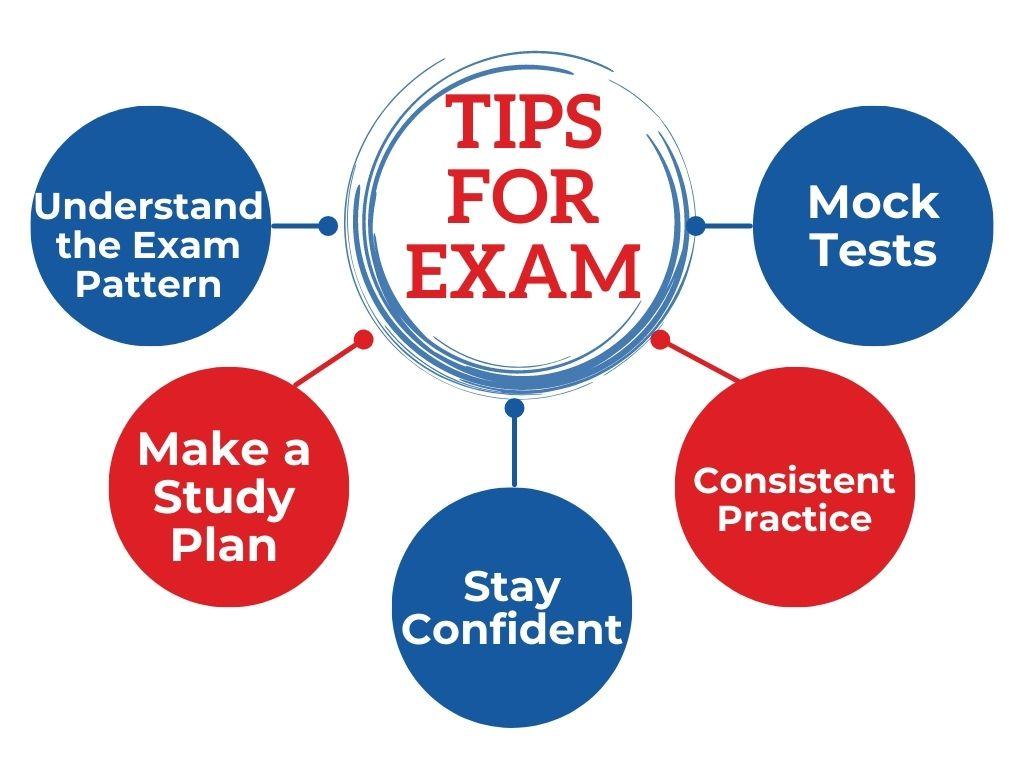
Break your preparation into three phases. In the first phase, cover the full syllabus once, building basics and making short notes. In the second phase, practise topic by topic and start solving full past papers under timed conditions, scoring yourself honestly and revising your weak topics. In the third phase, close to the exam, focus on revision, full length mock tests and current affairs, and stop learning entirely new topics. This phased approach keeps you from cramming everything at the end and builds real exam speed.
Track Madhya Pradesh GK separately: A dedicated MP current affairs and static GK note can quietly add several marks, which is often exactly the margin at the cut off.
Syllabus guides for each exam
Each post has its own syllabus and pattern, so use the detailed guide that matches your exam. The popular ones are the Group 4 syllabus, the Group 5 syllabus, the Patwari syllabus and the Police Constable syllabus. Each one lists the subjects, the marks split and the topics to focus on, so you can build a study plan that matches your exam exactly.
Allocating your time in the exam
Knowing the syllabus is only half the battle; using your time well in the exam is the other half. With 100 questions in 120 minutes, you have a little over a minute per question on average, but you should not spend that evenly. Move quickly through the sections you are strong in to bank easy marks, and leave the toughest questions for a second pass. Keep an eye on the clock, and never let a single hard question eat up the time of five easy ones. Practising full papers under time pressure, as explained in the previous papers guide, is the best way to build this instinct.
Madhya Pradesh General Knowledge in detail
Madhya Pradesh specific General Knowledge is the section that most often separates selected candidates from the rest, because it is scoring and predictable if you prepare it. Cover the state’s geography, including its districts, rivers, national parks and minerals; its history and culture, including dynasties, monuments, fairs and tribal heritage; its polity and administration; and its current affairs, including government schemes, appointments and recent events. Maintaining a dedicated note for MP GK and revising it regularly turns this into a reliable source of marks.
Mistakes students make with the syllabus
A few syllabus mistakes are very common. Some students use a generic syllabus instead of the one for their exact post, and end up studying topics that are not asked. Others spread their time evenly across sections, ignoring the marks weight, and underprepare the heavy sections. Many neglect Madhya Pradesh GK until the end, losing easy marks. And some never check whether their exam has negative marking, which changes the entire attempt strategy. Avoid these by downloading the correct syllabus, ranking sections by weight, starting MP GK early, and confirming the marking scheme.
A daily and weekly routine
Consistency beats intensity. A workable daily routine covers a heavy subject such as Maths or Reasoning with fresh practice, a portion of GK including MP current affairs, and a short language revision. Each week, set aside time for a full revision of what you learned and, in the later phase, a full length timed paper. Keep your notes short and your practice regular, because steady daily effort over months retains far more than long sessions crammed near the exam.
Revising in the last month
In the final month, stop learning entirely new topics and switch fully to revision, full length mocks and current affairs. Revise your short notes, re-solve the papers where you made mistakes, and focus on accuracy and speed. Sleep well in the final week and avoid burning out, because a calm, rested mind scores better than an exhausted one. Confirm your exam day logistics from your admit card so the last few days are about revision, not last minute panic.
Frequently asked questions
What subjects are in the MPESB syllabus?
Most MPESB exams cover General Knowledge and current affairs, General Hindi, General English, Mathematics, Reasoning, General Science and Computer Knowledge, with Madhya Pradesh specific GK carrying weight. Technical and nursing posts add subject specific sections.
What is the MPESB exam pattern?
It is usually a computer based test of 100 marks with 100 objective questions in 2 hours, in Hindi and often English. Negative marking depends on the exam, and multi shift exams use percentile normalisation.
Which books should I read for MPESB exams?
A focused set works best: NCERT or state board books for basics, one GK book with a Madhya Pradesh section, grammar books for Hindi and English, and practice books for Reasoning and Maths, plus past papers.
Is the syllabus the same for all MPESB posts?
No. The common subjects are similar, but the section weights and any technical sections change by post, so always use the syllabus for your exact exam.