MPESB Previous Year Question Papers
Past papers are one of the most useful tools in any MPESB preparation. This page explains why they matter, how to find genuine papers, how the official answer key and objection process work, and a practice method that actually raises your score.
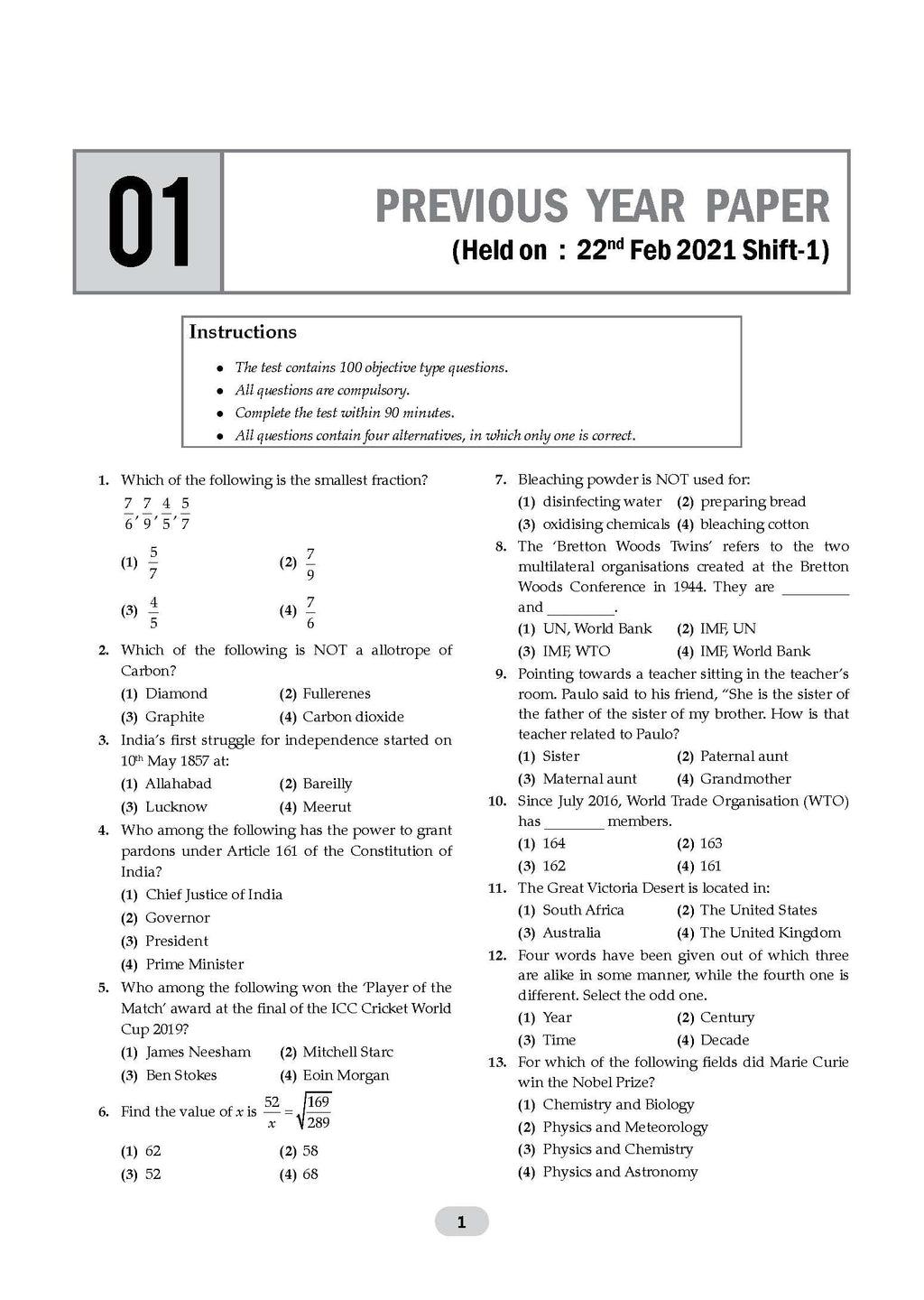
If you could keep only one resource for your MPESB preparation besides the syllabus, it should be previous year question papers. Past papers show you the real exam, not a guess of it. They reveal the actual difficulty, the way topics are framed, the balance between sections, and the topics that repeat year after year. Instead of preparing in the dark, you prepare against the real thing, which is exactly why toppers solve so many past papers before the exam.
Past papers help in several specific ways. They calibrate your sense of difficulty, so you are not surprised on exam day. They show you the high frequency topics that deserve extra revision. They build your speed and accuracy under time pressure. And they expose your weak areas clearly, because you cannot hide from a wrong answer. This page explains how to find genuine MPESB papers, how to use the official answer key, and how to practise so that each paper actually improves your score.
Where to find genuine MPESB papers
The most reliable source for genuine question papers and answer keys is the official site esb.mp.gov.in. After many exams, the board uploads the question paper and a model answer key, mainly so candidates can raise objections, and this official material is the gold standard. Always prefer the official answer key over any third party version, because unofficial keys can carry mistakes that quietly teach you the wrong answer.
Beyond the official site, you will find many coaching sites and apps that publish memory based papers and practice sets. These can be useful for extra practice, but treat them as practice material, not as the final truth. Always verify the answers against the official key where one exists, and be cautious about any paper that looks edited or incomplete. As an independent guide, this site does not host copyrighted question papers; instead it points you to the official source and explains how to use papers correctly, which keeps you safe and accurate.
Be careful with unofficial keys: A wrong answer learned from an unreliable key is worse than no practice, because you will repeat the mistake confidently. Cross check against the official key whenever possible.
How the official answer key and objections work
For many MPESB exams, the board releases a provisional answer key after the exam and gives candidates a short window to raise objections against specific questions, usually for a small fee per question. If your objection is valid, the board may correct the key, and the final result is prepared on the corrected key. This process is genuinely useful: it lets you estimate your score early using the provisional key, and it gives you a way to challenge a question you believe is wrong. Keep an eye on the official site after your exam so you do not miss the objection window.
To estimate your score from the answer key, match your recorded responses against the key, count your correct answers, and adjust for negative marking if your exam has it. Remember that for multi shift exams the final score is normalised, so your raw estimate is only an approximation of where you stand, not the exact final figure. Still, it is far better than guessing blindly while you wait for the result.
A practice method that works
Simply reading past papers does little. Solving them properly does a lot. Use this method to turn each paper into real improvement.
- Solve under exam conditions. Sit a full paper in one go, with a timer set to the real duration and no breaks, so you build genuine stamina and time management.
- Score honestly. Check your answers against the official key, applying negative marking if it exists, and write down your score.
- Analyse your mistakes. List every question you got wrong or guessed, and group them by topic to see your weak areas.
- Revise the weak topics. Go back to your books or notes and fix those specific topics before the next paper.
- Re-solve later. After a week, solve the same paper again to measure your improvement and confirm the topics are fixed.
Quality over quantity: Ten papers solved and analysed properly will help you far more than fifty papers skimmed once. Analysis is where the learning happens.
What the papers reveal about the pattern
When you solve several past papers for one exam, clear patterns emerge. You notice which sections carry the most weight, which topics appear almost every year, and how the difficulty is balanced across the paper. For clerical and group exams, General Knowledge and Madhya Pradesh GK tend to repeat reliably, while Mathematics and Reasoning reward steady daily practice. For police and guard posts, the General Knowledge, Reasoning and basic Science sections form the backbone. Use these observations to shift your study time toward the heaviest and most repetitive areas, which is the most efficient way to raise your score.
Exam wise practice guides
The general method is the same, but the pattern and the high frequency topics differ by exam. Use the detailed guides for your post, including the broad previous year papers overview, the Group 4 question papers guide and the Patwari previous papers guide. Pair your practice with the matching syllabus guide so you know which topics each question is testing.
How many years of papers to solve
You do not need decades of papers, but you do need enough to see the pattern clearly. Solving the most recent several years of papers for your exam usually gives a reliable picture of the repeating topics and the level of difficulty. Older papers can still help for static topics, but give priority to recent ones, because the pattern and the current affairs focus shift over time. The aim is depth, not just volume: a smaller number of papers solved and analysed properly is worth far more than many papers rushed through.
Building a personal error log
The single habit that turns past paper practice into real improvement is an error log. Every time you get a question wrong or guess one, write it down with the topic and the correct reasoning. Over a few papers, your error log reveals the exact topics that keep costing you marks, and those become your revision priority. Re-reading your own error log before the exam is one of the most efficient forms of revision, because it targets your personal weak points rather than general theory.
Mock tests versus past papers
Past papers and mock tests serve slightly different purposes, and you need both. Past papers show you the real exam, the genuine difficulty and the topics that have actually been asked. Mock tests, especially full length ones in the same computer based format, build your stamina, your time management and your familiarity with the on screen interface. A good plan uses past papers to learn the pattern and mocks to rehearse the exam experience, with honest scoring and analysis after each one.
Time management lessons from papers
Solving papers under the real time limit teaches lessons that no amount of reading can. You learn how long each section actually takes you, which question types slow you down, and when to move on instead of getting stuck. Over several timed papers, you develop a personal strategy: perhaps you do your strongest section first, mark doubtful questions for review, and keep a fixed buffer at the end. This rehearsed strategy is what keeps you calm and efficient in the real exam.
Free and paid practice resources
You can prepare well without spending much. The official site provides genuine question papers and answer keys for many exams at no cost, which should be your first resource. Free practice sets and current affairs are widely available too. Paid resources such as test series can add value with structured mocks and detailed analysis, but they are optional, not essential. Whatever you use, always verify answers against the official key where one exists, and treat unofficial papers as practice rather than the final word.
Frequently asked questions
Where can I get genuine MPESB previous year papers?
The most reliable source is the official site esb.mp.gov.in, which uploads question papers and model answer keys after many exams. Prefer the official key over any third party version.
How do I use the official answer key?
Match your recorded answers against the key, count your correct responses, and adjust for negative marking if it applies. For multi shift exams the final score is normalised, so this is an estimate.
Can I challenge a wrong question?
Yes. MPESB usually opens a short objection window after releasing a provisional answer key, often for a small fee per question. Valid objections can change the key and the final result.
How many past papers should I solve?
Quality matters more than quantity. Solving and properly analysing a moderate number of papers, fixing your weak topics after each one, helps far more than skimming many papers once.